
Punjab-wide service
Ant Control in Punjab
A line of ants marching to the sugar jar seems like a small thing — until it reaches the mithai box, the baby's bottle and the bed. Ant control works when it reaches the nest, not just the line, and that is how we treat ants in homes, shops and gardens across Punjab.

Ant Control Services
Choose one and book your slot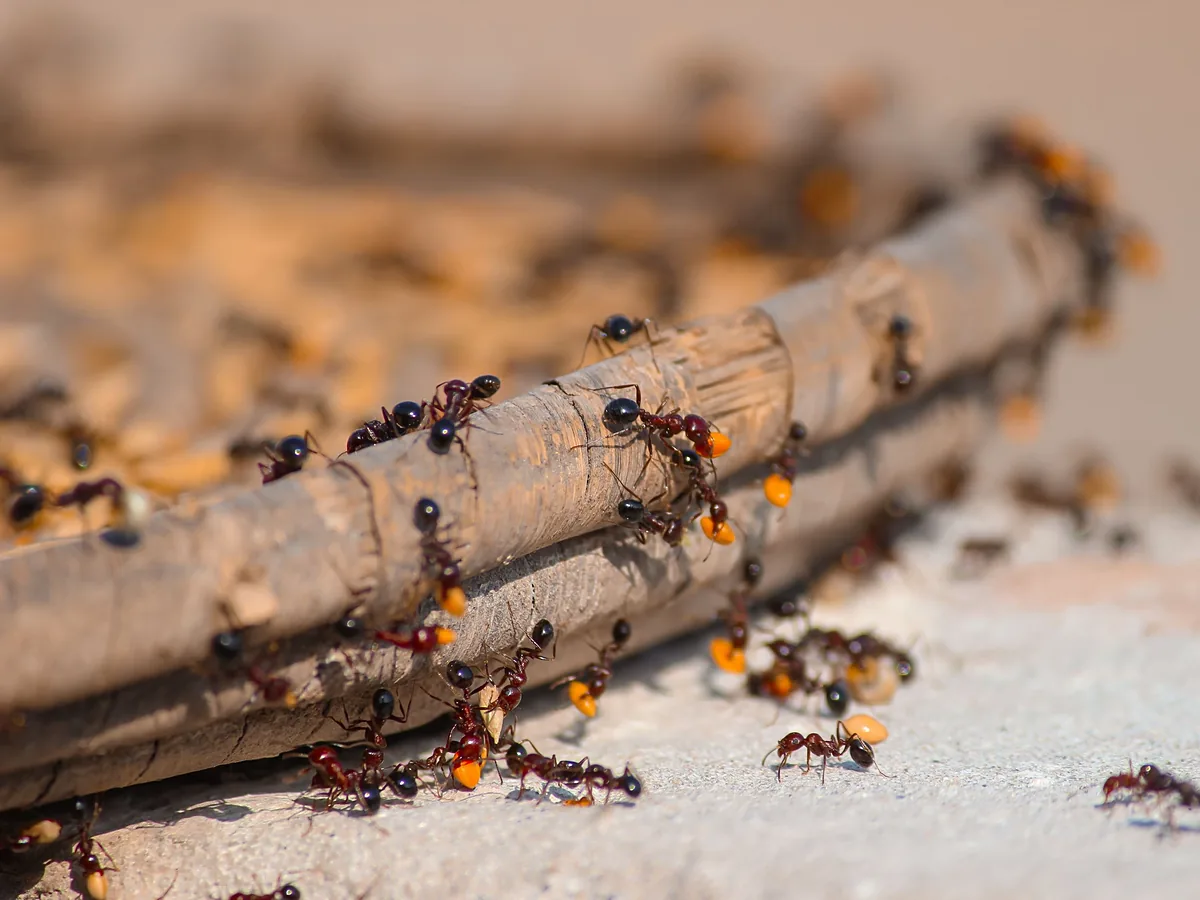

Ant Control in Punjab
What to knowAnts come indoors for two very different reasons in Punjab. In the dry heat of May and June they are looking for water — the kitchen sink, the bathroom, plant pots, a pet's bowl. Then the monsoon soaks the ground, their nests flood, and whole colonies shift into walls, floors and skirting gaps, which is why a new trail often appears the morning after a heavy shower.
Punjabi kitchens give them reasons to stay: gur and shakkar, sugar and tea, desi ghee, the mithai boxes that come home with every festival and guest, pickles and jams on the shelf. Small black and brown ants live in wall cracks and under tiles and forage for sweets and grease. Red ants (lal chinti) nest in lawns, flower beds, tree bases and the soil along boundary walls, and their bite stings — a real nuisance in a garden where children play or in a farmhouse courtyard.
Wiping a trail or spraying it with a household can kills the ants you can see, but the colony and its queen stay hidden in the wall, and a disturbed colony can split into new nests. Gel and bait laid along the trail are carried back by the worker ants and shared inside the nest, which is how the colony at the source is controlled. Spray still has a place — at entry points, cracks, skirting and outdoor nests where activity is heavy.
Also searched as: ant control in Punjab · chinti control · chinti bhagane ka tarika · red ant control · lal chinti treatment · ant gel bait treatment · ant pest control for home
Signs you need ant control
- A steady trail of ants along a wall, a counter edge or a window sill
- Ants inside jars, mithai boxes or the fridge door seal
- Small heaps of fine soil at the base of a wall, in tile joints or along the skirting
- Ant mounds in the lawn, in flower beds or along the boundary wall
- Stinging bites while gardening or sitting on the grass — usually red ants
- Winged insects coming out of a crack in large numbers — worth checking, because termite swarmers look similar
Before the technician arrives
- Stop wiping or spraying ant trails, and stop using insect chalk, a couple of days before — the technician needs to see the trails
- Keep sweets, gur, sugar and pet food in tightly closed containers
- Fix dripping taps and leaking pipes that give ants a water supply
- Show the technician everywhere you see ants, including the garden and the terrace
- Keep children and pets off lawns and sprayed areas until the technician says it is fine
How The Treatment Is Done
Step by step- 1Follow the trail
The technician traces the trails back towards the nests — wall cracks, tile joints, skirting, plant pots, the soil outside — and checks the kitchen and wet areas where the ants forage.
- 2Gel and bait on the trails
Gel or bait is placed along the trails and near nest openings so the worker ants carry it back and the colony at the source is controlled.
- 3Kitchen and wet areas
Kitchen edges, sink areas, bathrooms and other wet spots are covered, because ants keep coming back to food and water.
- 4Spray for heavy activity
Where activity is heavy — entry points, cracks, skirting, and outdoor nests in lawns and along walls — spray treatment is used, after the safety steps are explained.
- 5Let the bait work
Ants may look busier for a day or two as they collect the bait. You are told which spots not to wipe, and whether a return visit makes sense.
Ant Control Across Punjab
Find your cityMalwa
South of the Sutlej — Ludhiana, Patiala, Bathinda, Mohali and the cotton and grain belt
Doaba
Between the Beas and the Sutlej — Jalandhar, Hoshiarpur, Kapurthala, Phagwara, Nawanshahr
Majha
North of the Beas — Amritsar, Tarn Taran, Gurdaspur, Batala, Pathankot
Ant Control — Questions
Asked before bookingWhy not just spray the ants?
Spray kills the ants it touches, but the queen and the nest stay hidden, and a disturbed colony can scatter into new nests. Bait carried back to the nest works on the source; spray is kept for entry points and outdoor nests with heavy activity.
We have red ants in the lawn. Can they be treated?
Yes. Outdoor nests in lawns, flower beds and along walls are covered by the Ant Spray Treatment. Tell the technician where children or pets play so the timing and precautions can be explained.
Ants appeared after the rain. Is that normal?
Yes — rain floods ground nests and ants move indoors to stay dry. Sometimes they leave once the ground dries; if the trails keep coming, book the gel and bait treatment.
Are these ants or termites?
Ants have a narrow waist and bent antennae; winged termites have a straight, thick body and two pairs of equal wings that drop off easily. If you also see mud tubes or hollow wood, book a Termite Inspection instead.
Will gel be put where we cook?
Gel and bait go along the trails, into cracks and near nest openings — not on surfaces where food is made. You are told which spots to leave uncleaned for a few days.
Ants come back every monsoon. Is there a longer-term option?
Home General Pest Control covers ants along with cockroaches, spiders and silverfish in one visit, and an Annual Pest Control Contract (AMC) sets visits through the year. Either way, you pay after the service.