
Punjab-wide service
Mosquito Control in Punjab
From the first coolers of summer to the last warm days of October, Punjab gives mosquitoes plenty of water to breed in. Our mosquito control works on three fronts: where they rest indoors, the open areas outside, and the water where larvae grow.
Mosquito Control Services
Choose one and book your slot
Mosquito Control in Punjab
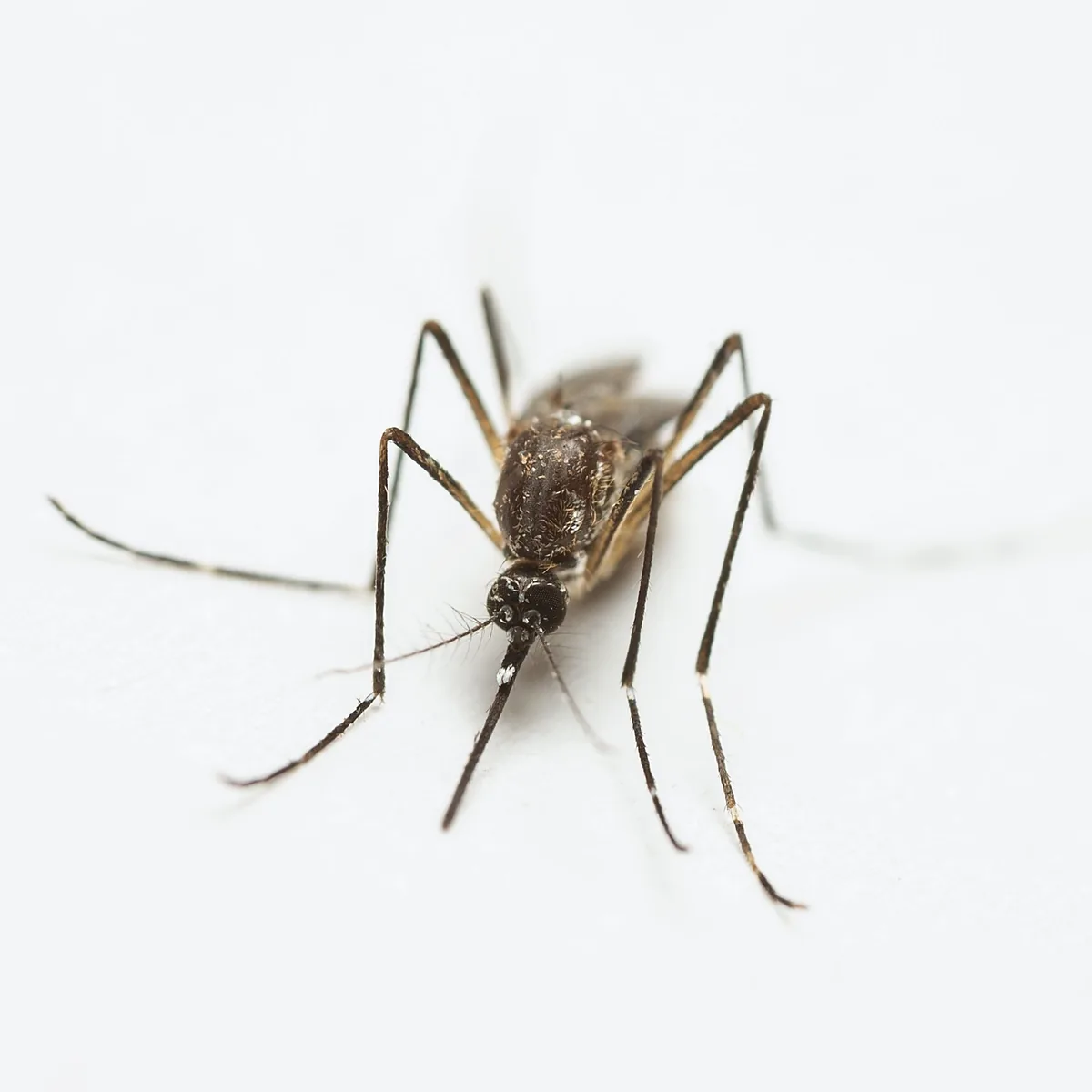
What to knowNot all mosquitoes breed in the same water. The dengue and chikungunya mosquito (Aedes, with white stripes on its legs) lays its eggs in clean stored water — a desert cooler's tank, a rooftop tank with a loose lid, flower pots and their trays, old tyres, a bucket on the terrace, the tray under the fridge — and bites mostly in the daytime. The common night-biting mosquito (Culex) prefers dirty water: open drains, nallahs, choked gully traps and septic overflows. Malaria mosquitoes favour clean pools, irrigation channels and fields that hold water.
Punjab has all of these. Coolers run in most houses from May, rooftop tanks are standard on kothis, many colonies sit beside canals such as the Sirhind Canal and the Bhakra Main Line, and paddy fields stand in water through the monsoon. Rain is heavier in the sub-mountain districts towards Pathankot and Hoshiarpur and lighter in the south-west, but every district gets its monsoon spell, roughly July to September, and mosquito numbers often stay high into October while the water left behind is still warm.
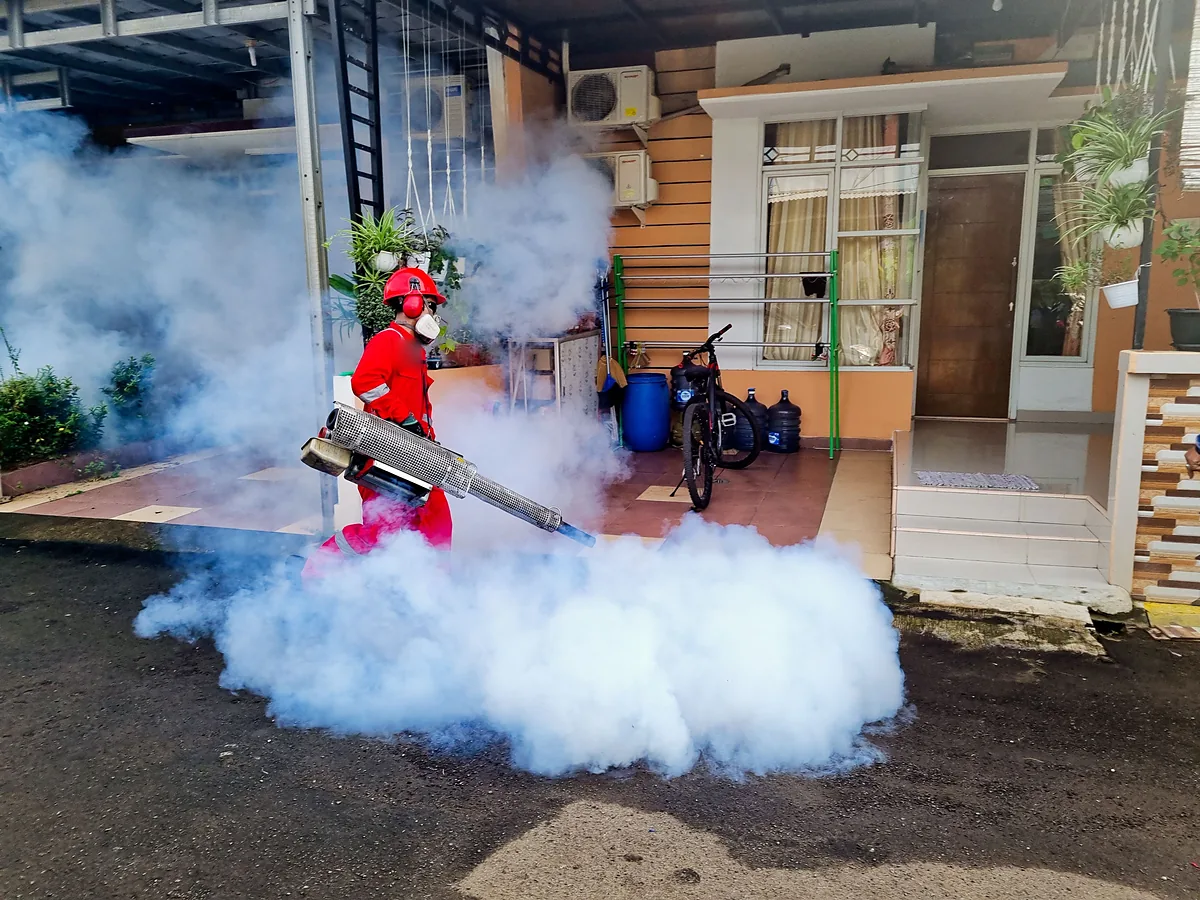
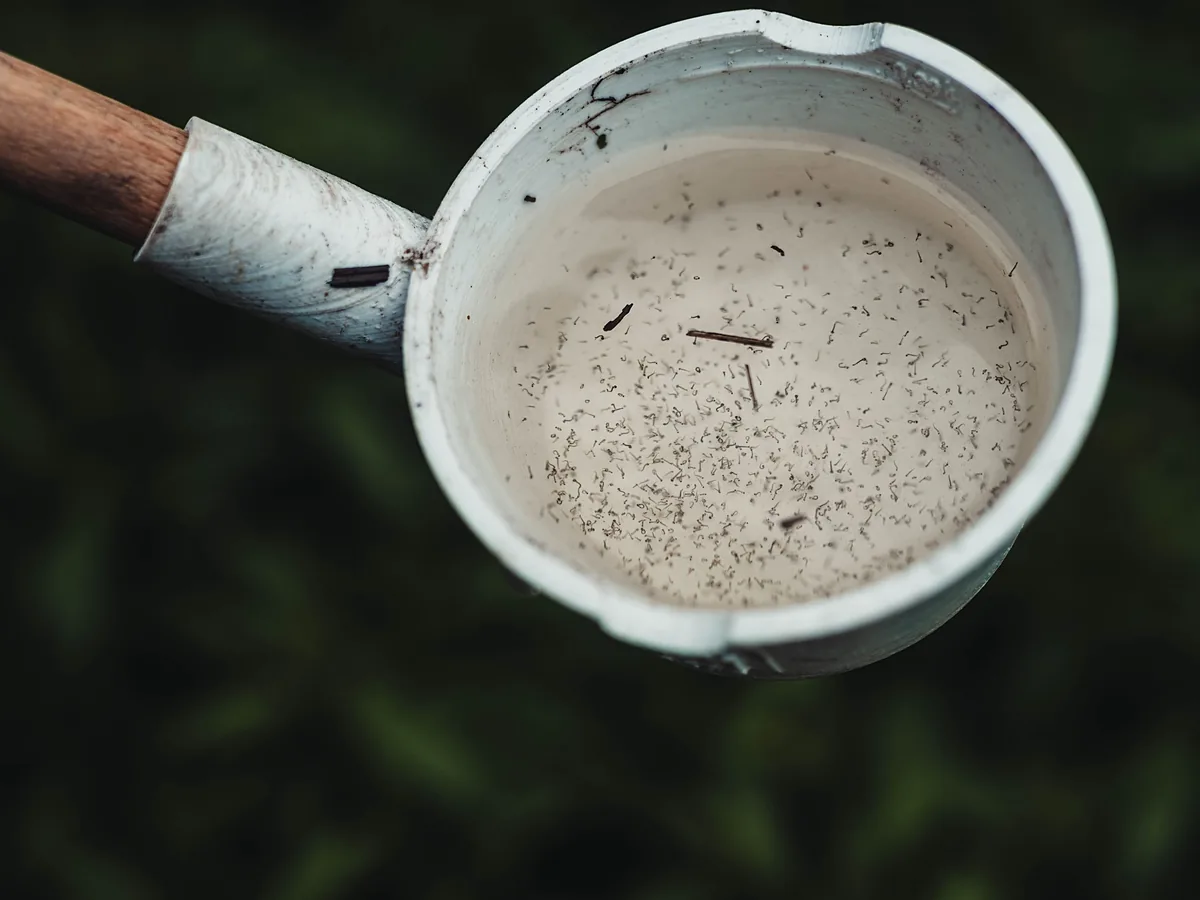
That is why one round of fogging is rarely enough on its own. Fogging knocks down the adult mosquitoes flying at that time; it does not touch the larvae in a cooler or a drain, which become the next batch in about a week of warm weather. Good mosquito control combines treatment of indoor resting places, outdoor fogging where it makes sense, and larvicide in the water that cannot simply be emptied.
Also searched as: mosquito control in Punjab · machhar control · mosquito fogging service · anti-larva treatment · dengue mosquito control · fogging for society · machhar se chhutkara · larvicide treatment
Signs you need mosquito control
- Bites in the daytime, especially on ankles and feet while sitting indoors — often a sign of breeding close by
- Mosquitoes flying out from behind curtains, under beds and dark corners when you move things
- Wriggling larvae in a cooler tank, bucket, flower-pot tray or overhead tank
- A choked drain, open nallah or low patch near the house where water stands for days after rain
- Swarms of mosquitoes over a lawn, park or compound at dusk
- Neighbours complaining at the same time — the breeding is usually nearby, not only in your house
Before the technician arrives
- Empty and dry the cooler tanks, buckets and pot trays you can; leave the rest for the technician to see
- Clear the terrace and courtyard of tyres, broken pots, tins and other junk that holds rainwater
- Cover food, drinking water, utensils and fish tanks before the indoor treatment
- Shut windows during outdoor fogging and keep children, pets and anyone with breathing problems indoors until the fog settles
- For a society or colony, tell residents the fogging date and time in advance
How The Treatment Is Done
Step by step- 1Find the breeding water
The technician walks through the house, terrace and compound looking for water-holding spots — coolers, tanks, pots, drains, sumps, junk — and points out which ones you can empty and which need treatment.
- 2Indoor resting places
Inside the home or office, the places mosquitoes rest in daylight are treated: behind furniture and curtains, under beds, in dark corners and store rooms.
- 3Larvicide where water stays
Drains, gully traps, stagnant pools, coolers and other breeding spots are treated with larvicide, so the larvae there cannot grow into adults.
- 4Outdoor fogging
Gardens, lawns, compounds, colonies and open areas are fogged, with attention to bushes, drains and shaded spots, at a time of day chosen for mosquito activity — usually early morning or evening.
- 5Stop new breeding
You get practical tips — changing cooler water and drying the tank regularly, covering tanks, emptying pot trays, keeping drains flowing — because breeding that restarts brings the mosquitoes back.
Mosquito Control Across Punjab
Find your cityMalwa
South of the Sutlej — Ludhiana, Patiala, Bathinda, Mohali and the cotton and grain belt
Doaba
Between the Beas and the Sutlej — Jalandhar, Hoshiarpur, Kapurthala, Phagwara, Nawanshahr
Majha
North of the Beas — Amritsar, Tarn Taran, Gurdaspur, Batala, Pathankot
Mosquito Control — Questions
Asked before bookingWill fogging alone solve the mosquito problem?
Usually not. Fogging brings down the adult mosquitoes around the property at that time, but larvae in drains, coolers and stagnant water keep producing new ones. That is why fogging is combined with larvicide treatment and advice on removing breeding water.
When should we book mosquito control in Punjab?
The heaviest period is during and after the monsoon, roughly July to October, but coolers and tanks can breed mosquitoes from late spring. Treating breeding spots before numbers climb makes them easier to keep down.
Can our housing society or colony get fogging done?
Yes. Outdoor fogging covers gardens, compounds, colonies and open areas. For regular work across a society's drains, basements, gardens and garbage areas, there is also Housing Society & Apartment Pest Control under Commercial Pest Control, with a visit plan made with the society.
Does mosquito control stop dengue?
No pest-control service can promise that. Treatment reduces the number of mosquitoes and the places they breed around your home. Keep using nets and repellents, and see a doctor for any fever during the mosquito season.
Will someone tell me who is coming?
Yes. Once your booking is in — date, time slot, address and property type — the team picks a trained technician for the job and lets you know ahead of the visit. You can also pick the technician yourself. Payment is after the work, by cash or UPI.